Not every endgame item in Dofus Retro sells on stats alone. The Cape du Petit Chapon Rouge is one of those rare pieces that players want because it looks great and performs well at the same time. That dual appeal translates to broader, more consistent demand than a purely utilitarian cloak of equivalent level — which is excellent news for any Tailor willing to invest in its complex recipe.
This guide breaks down what it takes to craft this level 171 cloak, how to source every ingredient efficiently, and where the profit actually comes from.
Why Players Chase This Cloak
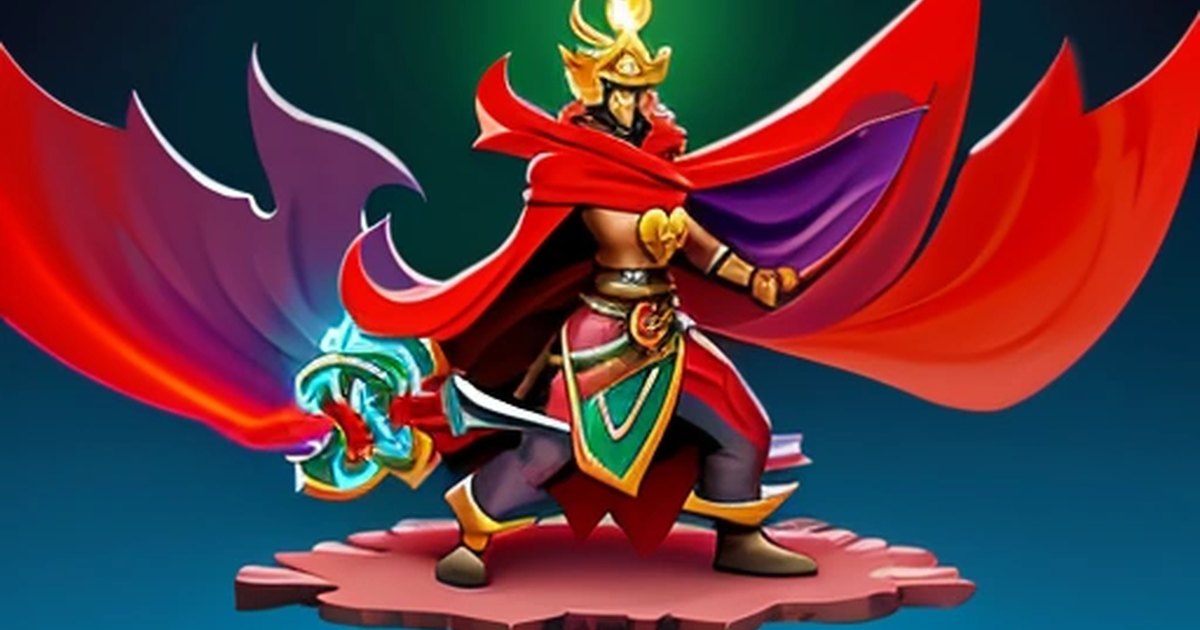
The Cape du Petit Chapon Rouge sits at the intersection of cosmetic appeal and statistical relevance. On Dofus Retro, where character appearance is part of the experience, pieces that stand out visually consistently sell above what pure stat comparison would suggest. Buyers for this cape include optimisers and collectors alike, keeping the pool of potential customers wide.
For the Tailor, this translates into a market with less price pressure than purely competitive endgame gear: collectors are less price-sensitive, and the emotional attachment to the item name and look means buyers are willing to pay a premium. At level 171, the Tailor requirement ensures the recipe is not accessible to casual craftsmen.
What the Recipe Demands
The Cape du Petit Chapon Rouge recipe (full details in the table below) has a clear volume anchor: Amygdales du Bitouf Sombre at 81 units. These drop from a specific level 100 monster and require sustained farming to accumulate. The second-heaviest requirement is the Calice de Fécorce at 58 units, a plant-type ingredient that may be harvestable depending on your character setup.
The remaining six ingredients are more modest in quantity but diverse in origin: Etoffe de Meupette, Barbe inexistante du Barbroussa, Crinière fleurie, and three single-unit pieces — Etoffe Corailleuse (level 150), Cape Sanguine (level 50), and Queue emplumée du Rasboul Majeur (level 500). That last one is the rarity bottleneck: a level 500 drop with irregular market availability.
Ingredient Sourcing: A Prioritised Approach
Lead with the Amygdales du Bitouf Sombre farm. Block out dedicated sessions against Bitouf Sombre monsters, using a fire-element strategy to exploit their weakness. These level 100 enemies can be chained efficiently, but accumulating 81 drops will take time — plan for multiple sessions and do not try to rush it into a single sitting.
The Calice de Fécorce is worth investigating as a harvestable plant. If your character has the relevant gathering skill, collecting it directly rather than buying from the HDV significantly reduces that ingredient's cost. For the Etoffe de Meupette and Barbe inexistante du Barbroussa, schedule targeted combat runs once the volume ingredient farming is well underway.
The three single-unit ingredients require a market-watching approach rather than pure farming. The Cape Sanguine at level 50 is generally easy to find at the HDV for a low price. The Etoffe Corailleuse (level 150) appears occasionally and should be purchased when it does. The Queue emplumée du Rasboul Majeur is the most unpredictable — set a maximum purchase price in your head and wait for it, rather than paying inflated prices in a rush.
Profit Margin: The Aesthetic Premium at Work
The Cape du Petit Chapon Rouge commands an aesthetic premium that pure stat cloaks at level 171 rarely enjoy. That premium lifts the sale price at the HDV above what ingredient cost alone would justify, giving Tailors a structural advantage when calculating margin.
Self-sufficiency on the Amygdales du Bitouf Sombre is the single biggest lever you control. Farming them yourself eliminates the costliest purchase from your production budget. Combine that with opportunistic HDV buys for the rare single-unit drops, and the per-cape margin becomes both meaningful and repeatable.
An additional revenue stream: if your Amygdales stock outpaces the rest of your ingredients, sell the surplus at the HDV. This resource has standalone market value, so farming efficiency never goes to waste — excess drops convert directly into kamas.
Automate the Volume Farm with MoonBot
Gathering 81 Amygdales du Bitouf Sombre and 58 Calices de Fécorce manually is a significant time commitment. MoonBot handles exactly this kind of repetitive, high-volume farming: it navigates to the target zones, engages the right monsters with the correct element strategy, gathers plant resources when available, and loops the whole circuit autonomously.
The Lua script included here routes through Bitouf Sombre territory, Meupette zones, Barbroussa areas, and includes gather calls for Calice de Fécorce and Crinière fleurie. Run it overnight and wake up with an inventory stocked for a productive crafting and selling session at the HDV.
Full recipe
Here is the exact recipe straight from the game data:
| Ingredient | Quantity | Level | Type |
|---|---|---|---|
| Amygdales du Bitouf Sombre | 81 | niv. 100 | Ressource |
| Calice de Fécorce | 58 | niv. 100 | Plante |
| Etoffe de Meupette | 18 | niv. 110 | Etoffe |
| Barbe inexistante du Barbroussa | 9 | niv. 80 | Poil |
| Crinière fleurie | 6 | niv. 80 | Plante |
| Etoffe Corailleuse | 1 | niv. 150 | Etoffe |
| Cape Sanguine | 1 | niv. 50 | Cape |
| Queue emplumée du Rasboul Majeur | 1 | niv. 500 | Queue |
Ready-to-use Lua script
Paste this script into MoonBot to automate gathering the ingredients:
-- Farm ingredients Cape du Petit Chapon Rouge (Tailleur niv. 171)
-- Priorite : Bitouf Sombre (Amygdales x81) + Meupette (Etoffe x18)
-- Target monsters: Bitouf Sombre, Meupette, Barbroussa
function move()
    config.setGatherList({ "Calice de Fecorce", "Criniere fleurie" })   -- resources to gather
    config.setHarvestMode("whitelist")
    config.setBankThreshold(90)   -- back to the bank at 90% pods
    return {
        { map = "MAP_1", path = "right",  gather = true, fight = true },
        { map = "MAP_2", path = "right",  gather = true, fight = true },
        { map = "MAP_3", path = "bottom", gather = true, fight = true },
    }
end

function bank()
    return { { map = "BANK_MAP", npcBank = true } }
end

function phoenix()
    return { { map = "PHOENIX_MAP", phoenix = true } }
end
-- Replace MAP_1, MAP_2… with the “x,y” coordinates of your maps.
Watch on YouTube